

Maintaining US Residency While Living Abroad: Key Factors

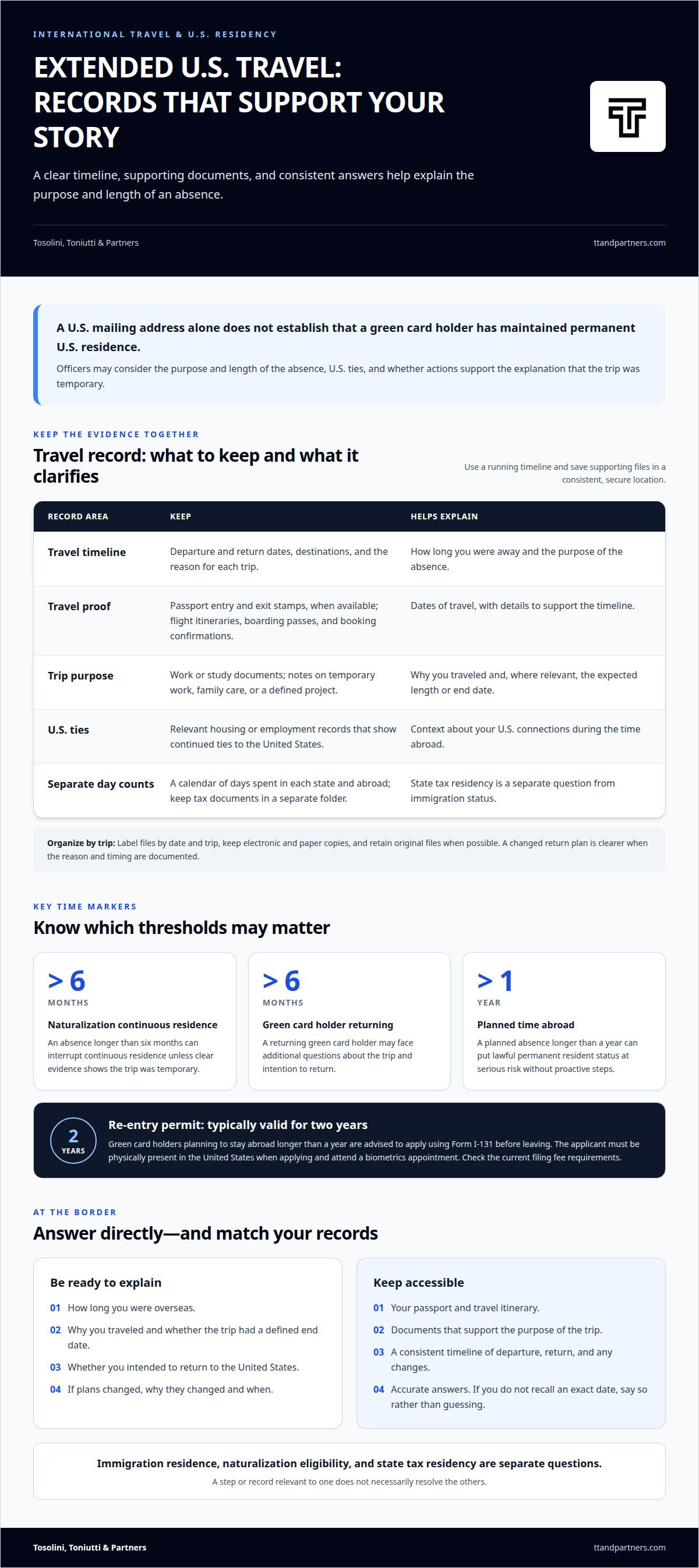
A U.S. mailing address alone doesn’t establish that you’ve maintained US residency while living abroad. For naturalization, an absence longer than six months can interrupt continuous residence unless you can show the trip was temporary. Green card holders returning after more than six months may also face additional questions.
It’s understandable to focus on keeping an address and documenting time outside the country. But immigration officers may consider the broader picture, including whether your absence was temporary and whether your records support that explanation. Immigration residence, naturalization eligibility, and state tax residency are separate questions, so a step that helps with one may not resolve the others.
This article explains what officers may consider, which travel and residency records to keep, and what to expect if questioned after an extended trip. It also clarifies how the rules differ for green card holders and U.S. citizens, and why planning ahead can help you present a clear, consistent account of your ties to the United States.
Table of Contents
1. Factors immigration officers consider when assessing residency
A mailing address alone doesn’t establish that a green card holder intends to maintain permanent U.S. residence. Officers may examine the purpose and length of an absence, the person’s U.S. ties, and whether their actions support a temporary trip. An absence longer than six months can interrupt continuous residence for naturalization unless the applicant provides clear evidence that the trip was temporary.
When maintaining US residency while living abroad, keep immigration and tax questions distinct. U.S. citizens and green card holders abroad are subject to U.S. income tax on worldwide income. Green card holders should consider their U.S. tax filing obligations, including when they earn income abroad. State residency is separate: a state may consider someone a resident based on time spent there or continuing ties, such as a spouse or dependent children who remain there.
U.S. citizens living abroad may be eligible for the foreign earned income exclusion or foreign tax credit if they meet the applicable requirements. Neither benefit follows automatically from living overseas, so include both in a tax review before filing.
Green card holders should keep a consistent record of their residence and explain why extended travel is temporary. A planned absence longer than a year can put lawful permanent resident status at serious risk without proactive steps. A re-entry permit typically remains valid for two years, according to U.S. Citizenship and Immigration Services.
Before moving, set a clear plan: record your travel dates and reason for moving, review federal and state filing obligations, and assess how long you expect to stay abroad. Review health insurance, Medicare eligibility, and Social Security separately. Each follows its own program rules, so clarify coverage and benefit eligibility before departure. These steps help keep your records and plans consistent.
2. Keeping records of international travel
A clear travel timeline helps explain the length and purpose of each absence. Keep a running record of departure and return dates, destinations, and reasons for travel. For example, note whether a trip involved temporary work, family care, or a defined project. This detail can help distinguish a temporary trip from a move abroad. Records matter especially when an absence exceeds six months, which may interrupt continuous residence for naturalization unless the trip was temporary.
Keep supporting documents with your timeline rather than relying on memory or passport stamps alone. Save electronic and paper copies in a consistent, secure location, and label files by date and trip. Useful records include:
Passport pages with entry and exit stamps, when available.
Flight itineraries, boarding passes, and booking confirmations showing travel dates.
Work or study documents that explain the purpose and expected length of an overseas stay.
Evidence of continued U.S. ties, such as housing or employment records, where relevant.
Green card holders should make sure their timeline covers every international trip, including short journeys and changes to planned return dates. A record showing that a stay was intended to be temporary, followed by documentation explaining a delay, provides more context than an unexplained gap. Keep original files when possible, since screenshots or summaries may omit useful details.
U.S. citizens and green card holders should keep immigration travel records separate from state tax day counts. Use a simple calendar to record days spent in each state and abroad, and keep tax documents in a separate folder. This distinction matters because state residency and immigration status are different questions.
If an extended absence raises questions about your travel history, get guidance on organizing your records before relying on an incomplete timeline.
3. Border questioning after extended travel
A green card holder returning after an absence longer than six months may face additional questions. An officer may ask how long you were overseas, why you traveled, and whether you intended to return to the United States. Answer directly and consistently with your travel timeline. If your plans changed, explain why and when.
Be prepared to describe the trip as a whole, not just its departure and return dates. For example, explain whether overseas work had a defined end date or a family matter extended your stay. Officers may consider whether your account supports a temporary absence. Clear answers and organized records can help explain the circumstances without speculation.
Keep relevant travel documents accessible when you return. Your passport, itinerary, and documents showing the trip’s purpose can support your explanation. If an officer asks about a detail, answer accurately; don’t guess at dates or give inconsistent estimates. If you don’t recall an exact date, say so rather than presenting an uncertain answer as fact.
Green card holders planning to stay abroad longer than a year are advised to apply for a re-entry permit before leaving the United States. The application uses Form I-131. A re-entry permit typically remains valid for two years, according to U.S. Citizenship and Immigration Services. Applying before departure matters because the applicant must be physically present in the United States when applying and attend a biometrics appointment.
The permit application carries a filing fee, but the amount depends on the applicable filing requirements. Check the current fee when preparing Form I-131, and keep proof of submission with your travel records. A permit and a clear explanation serve different purposes: the permit documents advance planning, while your answers address the actual absence.
Income tax questions are separate from border questioning. U.S. citizens and green card holders living overseas remain subject to U.S. income tax on worldwide income, so tax records may help explain your broader circumstances if relevant. Keep these materials organized separately from immigration documents.
4. How many days can a U.S. citizen or green card holder live abroad without losing U.S. residency status?
There is no single day limit that answers this question for both groups. U.S. citizens do not lose citizenship simply by living abroad. Green card holders must consider whether an absence conflicts with lawful permanent residence. For them, the trip’s length and purpose, as well as evidence of a temporary stay, matter.
An absence longer than six months may prompt additional questions when a green card holder returns. It can also interrupt continuous residence for naturalization unless the applicant provides clear evidence that the trip was temporary. Keep the distinction clear: a trip’s effect on naturalization eligibility and its effect on permanent resident status are related, but not identical.
A green card holder planning to stay abroad for longer than a year should apply for a re-entry permit before leaving the United States. Staying outside the country for a year or longer without proactive steps can put lawful permanent resident status at serious risk. A permit is a planning measure, not a substitute for explaining the absence or keeping a consistent record.
Naturalization adds another timeline. Green card holders generally must show continuous U.S. residence for five years, or three years if married to a U.S. citizen. Applicants generally must also demonstrate physical presence in the United States for at least half of the required period. Track each trip against both requirements, especially if citizenship is a future goal.
State tax residency follows separate rules. A person may generally be considered a resident if they lived in a state for more than half the tax year, while some states also consider continuing family ties. A long overseas stay therefore doesn’t settle every residency question. Immigration status and state tax treatment require separate planning.
If an extended absence may affect a Green Card or future naturalization, request a review of your immigration plans before departure.
Tosolini, Toniutti & Partners
Tosolini, Toniutti & Partners assists individuals with U.S. immigration matters, including Green Card concerns related to extended time abroad. If you’re planning a long absence, preparing to return, or weighing how travel could affect permanent resident status, legal guidance can help you understand the immigration issues and organize the relevant facts.
The firm’s immigration work also includes E-1, E-2, and O-1 visas. For residency questions, the useful next step is to discuss your status, travel history, and plans together, especially when an extended absence or future citizenship application may be involved. Contact Tosolini, Toniutti & Partners to discuss your immigration matter.
Plan Your Next Move With Clarity
Treat maintaining US residency while living abroad as a long-term planning decision, not an isolated travel question. Before making commitments overseas, define your intended timeline, the events that could change it, and the immigration goal you want your plans to support. An organized plan can make it easier to recognize when a change in work, family circumstances, or travel duration calls for a fresh legal review.
Consider discussing your circumstances before finalizing a move or extending an existing stay abroad. Clarify what is changing, what remains uncertain, and which decision must come first. That conversation can connect your personal plans with the immigration considerations relevant to your situation, without relying on assumptions about a different traveler.
Contact Tosolini, Toniutti & Partners to discuss your plans. With a clear next step, you can move forward with greater confidence and purpose.
Frequently Asked Questions
How Can You Maintain a US Address While Living Abroad?
Use a dependable U.S. mailing address for official correspondence, but don’t treat it as proof of immigration or tax residency. The IRS and state authorities need a valid mailing address for tax correspondence, and some U.S. banks require one for account communications. A virtual mailbox can help you review scanned mail and arrange forwarding. Consider whether an address in a particular state could also affect state tax treatment.
What If I Moved Abroad Mid-Year?
If you moved abroad during a tax year, you typically file as a part-year resident with your former state. You generally report worldwide income for the part of the year you lived there, then report state-sourced income, if any, for the period after moving. Keep your departure date and income records aligned so the return reflects the transition. State filing rules and treatment can vary.
What If I’m Planning to Return to the U.S.?
Set out a practical return plan, including your intended timing, reason for returning, and any work or family arrangements that affect the move. If you’re a green card holder, consider how the planned absence relates to your permanent resident status and any future naturalization application. If your plans change, update your travel, employment, and tax records consistently rather than relying on an outdated expected return date.
What does maintaining U.S. residency while living abroad mean for citizens, green card holders, and tax residents?
These terms describe different legal and tax questions. U.S. citizens abroad remain subject to federal income tax filing requirements, while green card holders must also consider how extended absences affect their permanent resident status. Tax residency can involve federal and state rules, and a person’s state tax treatment may differ from their immigration status. Identify which question you need to resolve before treating one status as an answer to another.
How can you maintain a U.S. state domicile while living overseas, and which state rules differ?
State domicile depends on each state’s rules and a person’s connections, not solely on an overseas home or mailing address. Some states may continue to treat someone as a resident if family remains there or until residency elsewhere is established. Presence tests also differ: California’s example uses nine months during a tax year, while Kansas’s example uses six months. These are state-specific examples, not a universal test.
What U.S. address, driver's license, voter registration, and banking ties help establish residency?
A U.S. address, driver’s license, voter registration, and active bank accounts can help document connections, but no single item answers every immigration or tax question. Keep information accurate and consistent with where you actually live and your plans. An address may have state tax implications, and banks may require a U.S. address for account communications. Consider each record in the context of the relevant status.



Comments