

How to Remove Conditions on a Marriage Green Card After It Expires

If your conditional green card has expired, file Form I-751 as soon as possible and include a written explanation for the late filing. Removing conditions on a marriage-based green card means asking USCIS to end your conditional status and grant permanent residence without conditions.
An expired card can make the next step feel uncertain, especially if your marriage has changed or your spouse has died. The key is to identify the correct filing route and gather evidence that supports it.
This guide explains who receives conditional status, what to do after a card expires, and how the process differs when a spouse dies or you need to file without your spouse. You’ll also learn how the timing and supporting documents shape a Form I-751 petition, so you can approach the next steps with greater clarity.
Table of Contents
What if my conditional green card already expired?
Act promptly: an expired card doesn’t remove the need to file Form I-751. The process of removing conditions on marriage-based green card status depends on your filing history, marriage, and family circumstances.
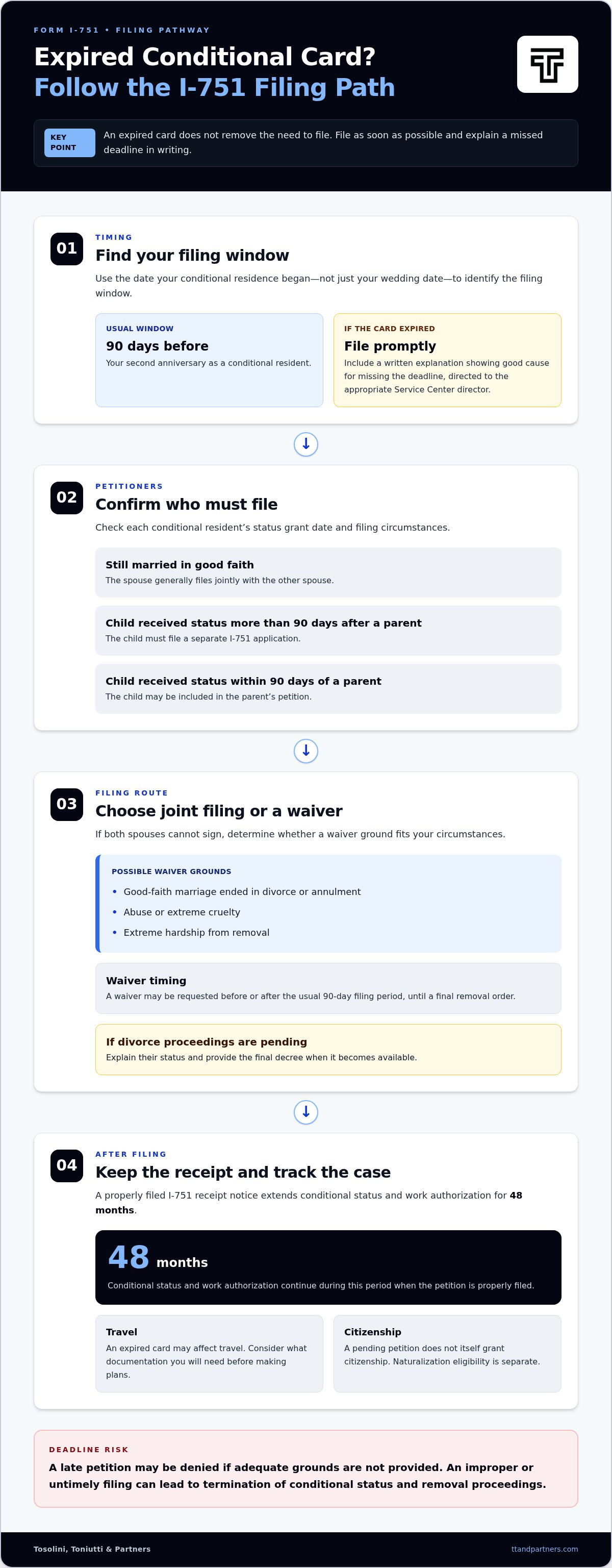
Check the Filing Window and RequirementsUse your conditional residence anniversary to identify the filing window. U.S. Citizenship and Immigration Services says conditional residents in the United States should file Form I-751 during the 90 days before their second anniversary as conditional residents. If your card has expired, file as soon as possible and include a written explanation showing good cause for missing the deadline. Direct that explanation to the appropriate Service Center director.
Determine Who Must FileIdentify each conditional resident who needs a petition. A spouse filing while still married in good faith generally files jointly with the other spouse. U.S. Citizenship and Immigration Services says a child who received conditional resident status more than 90 days after a parent must file a separate I-751 application. A child who received status within 90 days of the parent may be included in the parent’s petition. Compare each child’s status grant date before filing.
Choose Joint Filing or a WaiverDecide whether both spouses can sign or whether your circumstances support a waiver. Waiver grounds include a good-faith marriage that ended in divorce or annulment, abuse or extreme cruelty, and extreme hardship from removal. You may request a waiver before or after the usual 90-day filing period, until a final removal order. If divorce proceedings remain pending, explain their status and provide the final decree when available.If you missed the deadline for removing conditions on a marriage-based green card, include a written explanation with your late petition. A late filing may be denied if you do not provide adequate grounds. An improper or untimely filing can lead to termination of conditional status and removal proceedings.
Manage a Pending I-751Keep your receipt notice and track your case after filing. A properly filed I-751 receipt notice extends conditional status and work authorization for 48 months. Work authorization continues during that period. An expired card may affect travel, so consider the documentation you’ll need before making plans. A pending petition doesn’t itself grant citizenship; naturalization eligibility remains a separate question.
Conditional permanent resident status based on marriage
Check the date your permanent residence was granted, not just your wedding date. The grant date determines whether your marriage-based green card carries conditions.
Understand Conditional Permanent Resident StatusCompare your marriage date with the date permanent residence was granted. In the United States, you receive conditional resident status if your marriage was less than 2 years old on that grant date. For example, a marriage under 2 years old when residence is approved leads to conditional status. The relevant legal framework is Section 216 of the Immigration and Nationality Act and 8 CFR Section 216.
Compare Conditional and Permanent Green CardsRead your card’s expiration date and identify its classification. A marriage-based conditional green card is valid for 2 years, while a permanent green card is valid for 10 years. Conditional status is temporary residence, not a separate temporary visa. To become a permanent resident without conditions, file Form I-751 and seek approval. A waiver may apply when joint filing is unavailable under qualifying circumstances.
Review your original application and approval record to confirm your status. The key question is whether you had reached your second wedding anniversary when permanent residence was granted. An anniversary after approval does not change your initial classification. Keep the grant date, marriage certificate, and green card together; these records help establish the timeline for your petition to remove conditions.
Understand the context behind conditional resident rules without treating history as an eligibility test. In 1986, an immigration agency estimated that one in three marriages between a U.S. citizen and a foreign national were fraudulent. That historical estimate helps explain the scrutiny attached to marriage-based resident status. It doesn’t determine whether your own marriage was genuine or whether USCIS should approve your application.
What if my spouse dies while I’m a conditional permanent resident?
File Form I-751 without your deceased spouse, using the route for a surviving spouse. A conditional resident whose spouse dies may file between the spouse’s death and the green card’s expiration. A waiver petition may also be filed within two years of the spouse’s death. Include the death certificate and organize evidence showing the relationship was genuine.
Build a clear record of your shared life in the United States. Useful evidence may include shared housing records, travel documents, anniversary celebrations, and affidavits from people who knew you as a couple. U.S. Citizenship and Immigration Services identifies birth certificates for children shared by spouses as strong evidence of the marriage’s integrity. Choose documents from different points in your relationship, rather than relying on evidence from only one period.
Track each USCIS notice after submitting the petition. A Form I-797C receipt notice typically arrives within two to four weeks, and biometrics appointments are usually scheduled within a couple of months. USCIS may decide the case from submitted documents or request an interview. Keep your contact details current so appointment notices and interview instructions reach you.
Respond to any Request for Evidence by the deadline stated in the notice. Match each requested item to a document, label the evidence clearly, and include the original request letter with your response. USCIS may deny the petition if requested evidence is missing or incomplete. Keep copies of the full response and proof of delivery, along with the request notice and supporting records.
Who receives a conditional marriage-based green card
Compare the marriage date with the date permanent residence was granted. A person receives conditional resident status when the marriage was less than 2 years old on that grant date. The key takeaway is that the approval date, not the date you applied or later celebrated an anniversary, determines whether conditions apply.
Check the green card’s classification and expiration date after approval. Conditional residence through marriage lasts 2 years, while a permanent green card lasts 10 years. A conditional resident is already a permanent resident, but their status includes conditions that must be removed through the required petition. The card type indicates which process applies.
Review your marriage timeline even if you entered the United States under a different immigration status. For example, conditional status generally applies if permanent residence was granted before your second wedding anniversary. If your marriage had reached its second anniversary by the time residence was granted, this conditional classification does not apply.
Distinguish your initial classification from later changes in your circumstances. A divorce after approval does not change the original grant date or automatically end conditional status. Instead, you may seek a waiver of the joint filing requirement by showing that the marriage began in good faith. Abuse or extreme hardship may also support a waiver in applicable circumstances.
Use your grant notice and marriage record to establish the timeline before choosing a filing route. These documents help distinguish a conditional resident from a permanent resident whose card is nearing expiration. If your dates, status, or marriage history raise questions, discuss your immigration circumstances before preparing your next filing.
Tosolini, Toniutti & Partners: E-2 VISA
Tosolini, Toniutti & Partners provides Green Card legal services, including support with marriage-based residence matters. If your conditional card has expired, your spouse has died, or your filing route depends on a waiver, the firm can help assess the immigration issues and prepare for the next steps.
Gather your green card, filing history, marriage records, and any USCIS notices before discussing your case. Reviewing these documents can help identify the relevant petition route and the evidence your circumstances call for. For guidance on your Green Card matter, contact Tosolini, Toniutti & Partners or visit ttandpartners.com.
Move Forward With a Clear Immigration Plan
The next step is to turn your records and circumstances into a focused plan. For removing conditions on a marriage-based green card, that means understanding how your marriage history, filing route, and supporting documents fit together. A considered approach can help you address the petition clearly and keep your immigration decisions aligned with your long-term goals.
Tosolini, Toniutti & Partners handles Green Card matters and also offers E-1, E-2, and O-1 visa services. If you’re ready to discuss your next steps, connect with Tosolini, Toniutti & Partners to begin a conversation about your immigration matter.
With a clear understanding of the process and the evidence your case calls for, you can move ahead with purpose.
Frequently Asked Questions
Do I need an interview for my I-751 petition?
An I-751 interview isn’t automatic. USCIS may waive it when spouses provide strong evidence that their marriage is genuine, or request one to clarify the petition. Before filing, organize relationship records by date and check that the petition’s account matches those documents. If an interview notice arrives, follow its instructions and bring the requested materials, including relevant updated evidence.
How much does it cost to file Form I-751?
The filing fee may vary depending on how you submit Form I-751. There’s no separate biometrics fee for this petition, so the filing method determines the standard filing total. The fee is non-refundable, whether the petition is approved or denied. Before submitting, make sure your payment method matches your chosen filing channel.
What if my marriage ended in divorce, but termination of my residency will result in “extreme hardship” to me?
You may request an extreme-hardship waiver after divorce if removal from the United States would cause extreme hardship. The circumstances of the marriage may be relevant when requesting a waiver after divorce. Explain the hardship by describing circumstances that arose after permanent residence was approved, and organize records showing how those circumstances would affect you if you returned to your home country.
Will USCIS Interview You?
USCIS may interview I-751 petitioners, but some petitions are decided from submitted documents alone. An officer may use an interview to obtain additional information about the marriage or clarify gaps in the file. Review your submitted petition beforehand, note any changes since filing, and answer questions accurately. Follow the appointment notice’s instructions about attendance and documents.
When should Form I-751 be filed, and what is the filing window?
File Form I-751 during the 90 days immediately before your second anniversary as a conditional resident, according to U.S. Citizenship and Immigration Services. Filing too early can result in the petition being returned. If your card has expired or you missed the filing window, submit as soon as possible with a written explanation showing good cause for the delay.
What is the current Form I-751 filing fee, including biometric fees?
In 2026, the filing fee is $700 online or $750 by paper, with no additional biometrics fee for Form I-751. These figures cover the petition filing, not legal services. Select the amount that corresponds to your filing method and review the payment details before submission. Keep a copy of payment confirmation with your petition records.



Comments